Saturday, July 2, 2016

Train Teachers Like Doctors?


In an Op-Ed piece in yesterday’s NY Times, three administrators of the Banks Street School proposed that teachers be trained like doctors.  The key idea is that a teacher residency program would improve teacher training, reduce teacher turnover, and increase teacher effectiveness.  In the type of teacher residency they propose, a new teacher would be paid to work for a year, along with and under the supervision of an experienced master teacher while studying child development and teaching methods. This differs from traditional student teaching, which typically runs from 10 to 20 weeks, beginning mostly with observation in a classroom and progressing to teaching full-time with the lead teacher observing, though time in the classroom can vary widely among programs and states, as can what counts as “full-time teaching.” 

They assert that such a residency program would improve our schools and reduce the high cost of excessive turnover.  They estimate that it costs the U.S. $2.2 billion each year to replace teachers who leave their jobs. Of course, some of this turnover is natural, expected, and characteristic of any job; new teachers, however, are estimated to leave teaching at a much higher rate than normal for a typical job, as much as 50% turnover is a widely cited figure.  This article, along with others, such as Valerie Strauss’s Washington Post piece, The Real Reasons Behind the U.S. Teacher Shortage, decries a shortage of teacher throughout the U.S.

The authors argue that we should spend more money on teacher training and development and compare the costs of a residency program to the public money spent on training and developing new physicians.  The U.S. now spends $11.5 billion annually on medical education, which comes out to about $500,000 for each new doctor.  Good doctors are essential, but so are good teachers.  By their estimate, good residency programs would cost about $65,000 per year, including tuition and stipends.  They point to some areas in the public education budget to begin finding these dollars, such as substitute teachers and the $6000 to $18,000 spent per teacher on professional development, much of which is deemed by teachers as “ineffective.”  Sounds like a good idea.


Starting Early


   To see a World in a Grain of Sand

And a Heaven in a Wild Flower 

Hold Infinity in the palm of your hand 

And Eternity in an hour
--William Blake, Auguries of Innocence


We start Science in the early childhood years to channel and build on children’s natural predilection for discovery and their indescribable joy in finding out about how the world works. Today an earthworm; tomorrow, perhaps, a cosmic wormhole.


Young children are natural explorers and natural investigators.  When children are introduced to science early on as an extension of their wondering and question, it becomes fun and natural.  When science is introduced as experiences and experiments, it stays fun and natural.  Kim Saxe, one of the founders of the Design Thinking movement, has recently tweeted about the experience of awe and the role awe in motivating and renewing our students and ourselves.  This is the way science should be, especially in the early years.  The impulse to want to know what something is, how it works, and why it works is at the heart of science.  Of course, as you learn more and dig deeper into how the natural world works, it takes more skill and more effort to find increasingly more subtle answers to our more complex questions.  And, we need more complex tools and techniques to find these answers.  And it takes more work, more effort, and more grit to learn to use these tools that are necessary ferret out the answers we seek.  But, if we push the tools and techniques ahead of the awe, we kill the natural curiosity of our students.


Jason Silva gets at this same idea in his amazing video Awe.
See this YouTube video!
 

Saturday, June 25, 2016

Getting to Carnegie Hall? Natural-born Talent or Deliberate Practice?


An interesting debate about the respective roles of natural talent vs. deliberate practice rages among those interested in the origins of high-achieving individuals.  A 2014 NY Times article titled How Do You Get to Carnegie Hall?  Talent! explores this debate and leans toward the in-born talent side of the discussion.  In so many ways, this debates seems as misguided and as obsolete as the ancient Nature vs. Nurture debate in human development.  Well, in fact, it is this same debate, looked at from one particular perspective, extraordinary achievement.

As I read the discussion of nature vs. nurture, genes vs. environment in biology, the scientific community has come to a consensus that not only are both factors essential, there are large interaction effects between them.  For example, certain environmental factors are known to turn on certain genes so that they are expressed.  How can this not be true in the cases of talent vs. practice?

It is hard to make the argument that it is possible to reach the highest levels of performance in a significant field today without considerable deliberate practice. K.A. Ericsson, the researcher whose famous study resulted in what has become known as the "10,000 hour" principle, defines deliberate practice as focused time spent with a teacher or coach, or working hard on mastering progressively difficult steps or phases in the skill.  Michael Jordan spending hours shooting free-throws alone in the gym counts.  Just shooting causal hoops with friends does not.

Saturday, June 18, 2016

It All Starts Here!

Add caption


A few years ago, as I was sitting in my empty-for-the-summer lab, getting ready for the return of my students in a week or so, I heard a voice from outside my door.

"I've just got to go in here!" she exclaimed. A young woman popped through the door, looked around and spotted me about to ask her how I could help her. "I used to go to school here," she explained. "I can't believe how much it looks the same."

I've been teaching science at this school for ten years at that time and I knew she wasn't one of my former students. "You must have had Molly for Science class," I offered, knowing this was a safe bet since Molly had taught here for more than thirty years.

"Yes," she brightened. "How is Molly?"

"She's retired to Oregon and spending lots of time with her grandchildren."

"You know, it all started here," she marveled, spinning around and looking intensely, trying to take in the whole room. "I remember learning about trees and flowers, studying crayfish, working with colored solutions and rocks in this room. Now I'm studying for my Ph.D. in biotechnology at Penn!"

We talked some more about what was the same and what was different, and what she remembered the most. She happily agreed to come back when she was in town to talk to my current students about her path from sitting in this lab doing many of the same hands-on investigations my students do now to working at the highest levels of science in a scalding hot area of research and development at one of the world's premier universities.

The room seemed even quieter and emptier when this dynamic young alumna, our own nascent scientist left and I was left again to my thoughts. Most school days in my lab are filled with enthusiastic kids and the wonder of finding things out through hands-on inquiry. Day to day progress is difficult to judge, however, and some days seem especially slow. Social chatter and just plain messing around sometimes seem to drive out deep scientific thinking.

But, after all, they are teens and tweens who come through my lab. Who can tell what learning will stick and what will fall away, which seminal ideas land on sand, which on rocky soil, and which on fertile ground?


Most of my students will never be scientists, but all of them will be consumers of the products of science and technology, as well as citizens dealing with the impacts of biotechnology in medicine and food production, the impacts of information technology on nearly everything, and the impacts of humans on the environment and global climate change on absolutely everything and everyone. Everyone needs a toolkit of basic science knowledge and the tools to think critically about the scientific questions and research that permeate our lives.

What teachers do, does make a difference, I mused. It all starts here.

Saturday, June 11, 2016

Summer Fun – Simple, Safe Rocket

Blast Off!


Everyone loves rockets.  My students and I never get tired of them.  Besides the fun, there is a lot of good physics learning in carbon dioxide rockets.  There are many ways to make a rocket. 

The simplest rocket I’ve ever found requires only some Alka-Seltzer tablets, an old film canister, and some water.  You just put the tablet in the film canister, pour in a bit of water, and snap the cap back on the film canister.  Then step back.  It only takes a few seconds for the pressure to build up enough for the lid to come flying off with a pop.  How high can you get a lid to fly?  Try varying the amount of water and the number of tablets.  Are more tablets always better? 

Film canisters are the perfect size for the tablets to fit in flat, but any vial with a cap will work.  These film canisters used to be everywhere and you may still have some around the house.  A store that develops film may have them or you can now buy them online.

Add some math to this by making a graph.  Try one tablet, then two, then three, and so on.  Or use fractions, but breaking tablets in half and measure by halves.  Tape a yardstick to a wall nearby so that you can better estimate the height the lid reaches by eye.  Maybe you can catch the lid at the top of its flight near the yardstick with your phone camera from a side angle.  This is a nice use of a new technology to aid in a formerly hard to measure experiment. 

Record how high the lid flew, your Y variable, for each number of tablets, your X or experimental variable on a piece of paper and then try making a coordinate or Cartesian graph.  Make multiple tries, maybe three, for each number of tablets.  What can you learn from looking at your graph?

The graph isn’t necessary to have some fun with science this summer and it may be best to just start by just exploring what happens with the film canister rocket.  After the excitement wears off a bit, you might introduce the idea of the graph.

Saturday, June 4, 2016

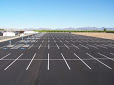
No Parking Lot Science!


While on a school camping trip recently, my friend Sam remarked to me that a lesson taught to our students by one of the naturalists was “90% parking lot science.” 

“What do you mean?” I asked Sam, who had been a naturalist for several years earlier in his career.  “Well,” he explained, “if you are outdoors in nature and the same lesson could be taught in an empty parking lot, that’s Parking Lot Science.”

As we talked more, Sam expanded on the idea of parking lot science.   The naturalist had been reviewing the concept of the methods of science with our class and had stuck pretty close to mentioning each phase and perhaps an example.  “That lesson could just as easily been taught in the classroom or an empty parking lot.  Nothing in that lesson required or used our setting out here in the woods.” 

Kevin Beals
“When we’re out here,” he continued, “let’s focus on whatever we see around us in nature.  Let the kids find what interests them and observe it and get to know it.  You only really need three questions for a whole lesson or a whole day of being in the woods:  ‘I wonder …’; ‘I notice …’; and ‘This reminds me of …’.”  Sam mentioned that he got these ideas from Kevin Beals, who is a friend of his.   Kevin co-directs the naturalist education program Beetles at the Lawrence Hall of Science.

As we talked more, I reflected on how right he was.  During this trip and with this opportunity, why not just spend the time letting our students explore and ask questions.  Let them notice what interests them and share what they wonder about.
Blue-eyed Grass?

Pacific Gopher Snake
Though I am getting over it, I sometimes worry that I “should” be able to identify every rock, bird, and tree in our local ecosystem, as well as give a brief précis of its origins, taxonomy, and life cycle.  But, of course, my job is to help guide inquiry, not provide all the answers.  So our talk reminded me of my long-standing resolution to relax, to listen to their questions, and to explore nature with them.  From time to time, we all stop, sit, and write down our questions, and draw pictures of what we see and want to know more about. Back in the classroom, we can spend time looking up more about what we found in nature.  As our knowledge deepens and we return to the woods, we’ll see even more next time.

Saturday, May 28, 2016

In a Digital Future, Are Textbooks History?


A few years back, while buying a science textbook for my daughter's high school chemistry class, I noticed that her $180 textbook also came in a relatively cheaper electronic version. My wife, who loves her Kindle, had suggested that we solve the problem of lugging too many heavy textbooks and save some money by buying digital textbooks.   Are we are at the leading edge of a fundamental change in educational technology?

In the United States, textbooks are a $14 billion market, about evenly divided between the K-12 segment and the college segment.  This market is on the verge of being disrupted.  The web and digital media disintermediate knowledge and shatter historical monopolies on information, communication, and learning. They are a classic example of what Clayton Christensen, currently dean of the Harvard Business School, termed "disruptive technology" in his prescient first book, The Innovator's Dilemma.

Schools and schooling are moving online. More schools and increasing numbers of teacher are creating their own instructional materials.  They make PowerPoint presentations, podcasts, and YouTube videos and post them to the web. Neeru Khosla's CK-12 Foundation, which creates digital textbooks from free, digital media, has submitted several of its "flexbooks" for adoption by the state of California, which the department of education hopes might save millions of dollars. 


I don’t use textbooks.  All my lessons are hands-on, inquiry science where we are either doing an experiment or reflecting on and creating meaning for an experiment that we have just done.  We experiment, we talk, we write.  I tell my students that our textbook is the one they create in their science notebooks. 
In the past, I kept some sample textbooks to look something up.  Now I use trusted sites on the web to look things up.  For ideas, I might use the web or some creative books, such as Culinary Reactions, a great book on food chemistry by Simon Field, to plan a lesson.  But no textbooks.  Move over McGraw-Hill and give Gutenberg the news.